Just 2 Words Plus
- 4.6
- Rating
- 10.00K
- Installs
- Free
- Price
 Analysis by App-foxy
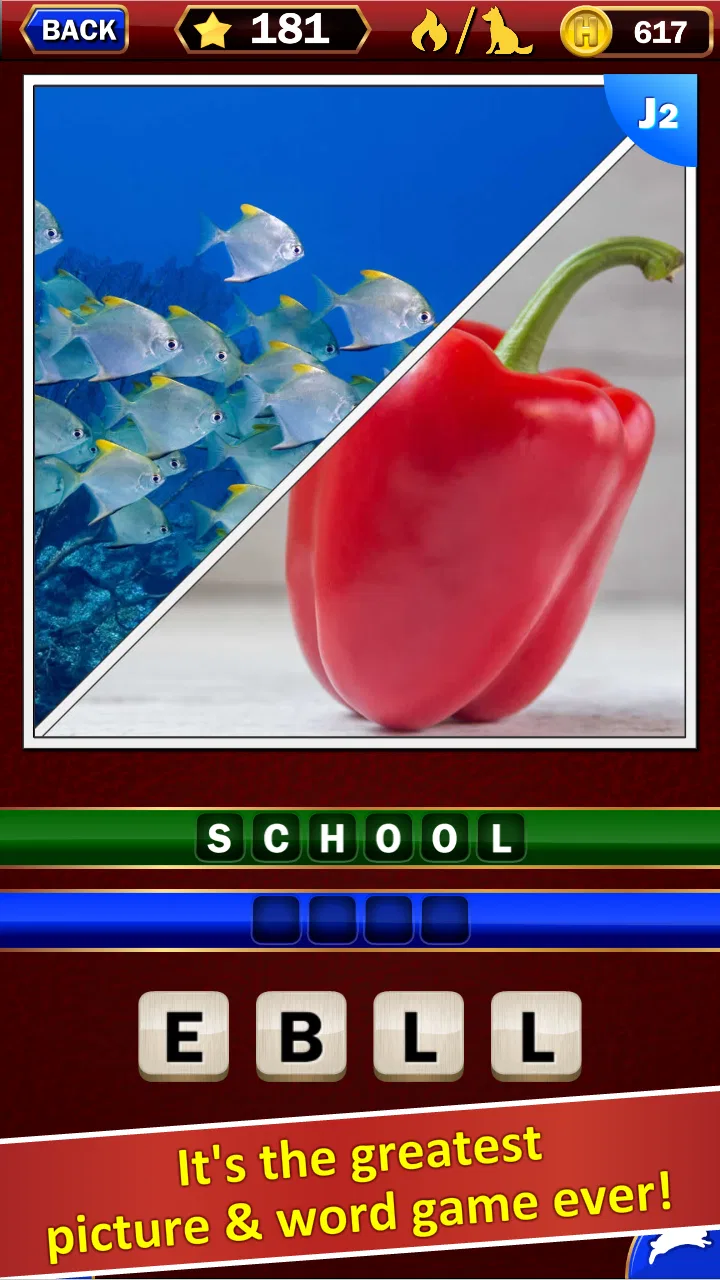
Some word games are built around long clues, complicated rules, or a huge dictionary of modes. Just 2 Words Plus takes a much narrower route: each answer is made of two words, and the challenge is working out the pair the puzzle is pointing toward. I found that simple restriction gives the game a surprisingly clear rhythm. It is easy to understand within a minute, but solving a difficult clue can still make me stop, rethink the wording, and try a connection I had initially overlooked.
This is a free word game from Just 2 Fun, aimed at Everyone and available for devices running Android 6.0 or later. It has reached over 10 thousand installs and holds a 4.6 average from around 2.4 thousand ratings, which fits my impression of it as a small, focused title rather than a sprawling puzzle platform. The game is best approached as a short mental break: open it, solve a few two-word challenges, and leave when your attention starts to fade.
How the basic puzzle routine feels
The baseline workflow is refreshingly direct. I read the prompt, consider the likely relationship between the words, and enter a two-word answer. There is no need to learn a complicated scoring system before playing. That makes it suitable for a quick session while waiting for an appointment, sitting on public transport, or taking a break from work.
You May Also Like

 Blood Strike: 2.5 Anniversary
Blood Strike’s Loadouts Turn Every Drop Into a Tactical Gamble
A close look at Blood Strike’s custom loadouts: how fast access to signature weapons reshapes its battle royale rhythm, rewards preparation, and narrows the gap between fights.

 Pandora - Music & Podcasts
Pandora’s Music Is Easy to Start, but Harder to Recover
Pandora’s strength is its low-effort path from a seed to a station. Its weak spot is how much confidence it asks you to place in connection, setup, and quiet recovery.

 8 Ball Pool
 Is Built on Rivalries, Rematches, and Routine
A close look at the rivalries, rematches, shared routines, and unanswered safety questions that turn a quick pool match into a persistent mobile community.

 Samsung Music
’s Quiet Strength Is Playing What You Already Own
Its reach comes less from spectacle than from dependable access to a personal library. That simplicity is both the app’s strongest retention engine and its ceiling.

 AccuWeather: Weather Radar
AccuWeather Review: A Quick, Clear Forecast for Everyday Decisions
For everyday plans, the best forecast is the one you can understand quickly. AccuWeather makes rain timing, radar, and local conditions easy to act on, with a few trade-offs.

 Hill Climb Racing
Why Hill Climb Racing Still Turns Crashes Into One More Run
A tiny car, a bumpy hill and one more upgrade: Hill Climb Racing keeps resurfacing because its simple chaos makes every near-miss feel personal.
More From Our News Desk
View All News


The two-word limit changes how I think. In an ordinary crossword, I can use a crossing letter to narrow down a long answer. Here, the clue has to be interpreted more broadly. I look for familiar phrases, paired ideas, opposites, categories, and word combinations that people naturally say together. The answer is often less about obscure vocabulary and more about recognizing the intended connection.
That distinction matters when deciding whether this game suits you. If you enjoy language puzzles that reward association and flexible thinking, the format is appealing. If you prefer strict clues with one obvious logical route, some puzzles may feel less precise. A pair of words can be related in several reasonable ways, so the satisfaction depends partly on understanding the game’s intended answer rather than proving that no alternative exists.
My most useful everyday habit is to avoid staring at the same interpretation for too long. I first write down the most natural pair that comes to mind, then deliberately switch categories. Could the clue be pointing to an action instead of an object? Is it a common expression rather than a literal description? Is the relationship based on contrast, sequence, or context? This small reset is more effective than repeatedly rearranging the same guess.
A realistic example is playing during a short coffee break. I might solve one puzzle immediately, spend several minutes on another, and then stop without feeling that I have committed to a long campaign. That makes the game less demanding than a full crossword app. At the same time, it is more mentally engaging than a passive scrolling break because every puzzle asks me to make a compact decision.
Why the two-word rule works
The restricted answer length creates a useful tension. The game is approachable because the response is short, but the clue can still be broad enough to require interpretation. I often begin with a literal answer and then discover that the intended pair is an idiom, a familiar combination, or a phrase associated with a particular situation.
Experienced players can turn that into a repeatable process. I scan for the strongest word in the clue first, then list the kinds of words that commonly follow or precede it. After that, I test whether the second word makes the pair sound natural when spoken aloud. This is faster than treating every puzzle as an entirely new problem, and it helps separate a genuine phrase from two words that merely share a loose connection.
Another useful technique is to say possible answers quietly. A pair that looks plausible on screen can sound awkward when spoken. Conversely, a familiar expression may become obvious once heard as a complete phrase. This is especially helpful when I am stuck between a literal interpretation and a more conversational one.
Settings and session habits worth checking
The most important practical step is to look through the available settings before settling into regular play. I do not assume that every puzzle game handles sound, notifications, or presentation in the same way. Checking those controls lets me make the experience fit the moment: quieter for public places, less distracting when I am working, and easier to read when I am playing for longer than a quick break.
I also recommend checking how the game presents help or answer-related actions before using them casually. In a word game, a hint can be valuable when it breaks a genuine dead end, but it can also remove the best part of the puzzle if used on the first sign of difficulty. My preferred rule is to attempt several different interpretations first, then use assistance only after I have identified what kind of clue is blocking me.
This is one area where experienced use is less about secret options and more about restraint. I avoid changing settings repeatedly in the middle of a puzzle session because it interrupts my mental rhythm. Instead, I adjust the presentation once, decide whether I want sound and notifications, and then keep the interface stable while I concentrate.
The game is free to download, though optional in-app purchases range from $0.99 to $19.99 per item. That makes it sensible to treat assistance or extras as a deliberate choice rather than part of the basic routine. I would not spend automatically just because one puzzle is frustrating. First I try a category switch, a spoken version of the clue, and a short break. Returning with fresh attention often does more for solving ability than immediately using a paid option.
Faster patterns for solving without rushing
Speed in this game comes from recognizing relationships, not from typing quickly. I have found three mental passes especially useful. The first is the everyday-language pass: what two words would people commonly say together? The second is the contrast pass: are the words connected because they represent opposite ideas or different ends of a scale? The third is the context pass: would the pair belong to a place, activity, object, or familiar situation?
These passes prevent me from getting trapped in one type of reasoning. A clue that seems impossible as a definition may become manageable as a phrase. A clue that looks like a category may actually be asking for a common pairing. The two-word format rewards this movement between interpretations because there are so few letters to guide me.
I also use a “strong word first” shortcut. When one part of the clue feels more distinctive, I build around it instead of trying to solve both sides equally. I ask what words naturally appear beside it, then remove combinations that sound forced. This is quicker than generating random pairs and gives me a reason for every guess.
Another advanced habit is keeping a mental distinction between recognition and confirmation. Sometimes I recognize a likely phrase immediately, but I still check whether it answers the actual clue rather than merely being familiar. Other times, I have a technically related pair that does not feel like the intended solution. The best answer usually has both qualities: it connects to the clue and sounds like a natural two-word expression.
When playing with friends, I would use the game as a conversation starter rather than turn it into a strict competition. Two people can interpret the same clue differently, explain their reasoning, and compare which association feels more natural. That social use highlights one of the title’s limitations as well: because word relationships can be subjective, disagreement does not always mean one person has poor vocabulary.
Where the challenge becomes less predictable
The biggest friction is the narrow answer structure itself. It is elegant when the intended pair is clear, but it can feel restrictive when a clue suggests a longer phrase or several equally familiar combinations. I sometimes know exactly what idea the puzzle is pointing toward but need to reduce it to the particular two-word form the game expects.
That makes the title less suitable for players who want a large variety of puzzle mechanics. It is not the right choice if you are looking for crosswords with intersecting letters, anagram rounds, spelling races, or a broad collection of minigames. A conventional crossword app is better for people who enjoy using confirmed letters and a grid to build certainty. A word-association game with open-ended answers may suit players who prefer looser creativity.
The game can also lose some appeal if you play for too long in one sitting. Its central idea is strong, but the experience remains centered on the same two-word solving task. I get more from it when I use short sessions and return later. Treating it like an endless marathon makes the format feel narrower than it does when used as a focused daily-style mental exercise.
Version 2.70 is compatible with Android 6.0 and later, so the operating-system requirement is not especially demanding for supported Android users. Still, compatibility alone does not decide whether it belongs on your phone. The more important question is whether you enjoy clues that depend on language instinct, phrase familiarity, and a willingness to reconsider your first interpretation.
The Everyone age rating makes it a reasonable choice for shared, family-friendly play. I could hand it to someone who wants a simple word challenge without first explaining mature themes or complicated controls. Younger players may benefit from playing alongside an adult when a clue depends on idioms or expressions they have not encountered yet, while older players can use it as a compact vocabulary and association exercise.
Who will get the most from it
I recommend this game to people who like solving in small bursts. It works particularly well for someone who wants a puzzle that starts immediately, does not require a long tutorial, and can be paused mentally between everyday tasks. It is also a good fit for players who enjoy discussing why an answer works, because the two-word format makes the relationship between clue and solution easy to examine.
It is less convincing for players who need visible progression systems, extensive customization, or a constantly changing set of mechanics. If your ideal word game is about building a large vocabulary through dictionary definitions, this may feel too dependent on common phrasing and association. If you dislike answers that can seem debatable, the occasional ambiguity may become more irritating than entertaining.
For new players, I suggest beginning without trying to be fast. Read each clue naturally, form one likely pair, and then test it against the wording. If it fails, change the relationship you are looking for rather than only swapping one word. After a few sessions, the useful patterns become quicker to spot, and the game feels less like guessing.
For returning players, I suggest creating a consistent routine: play a small group of puzzles, stop after a stubborn one, and return later instead of burning through every possible hint. This preserves the challenge and makes progress feel earned. I also find it helpful to remember the type of mistake I made. Was I too literal, too broad, or focused on an uncommon phrase? Identifying that pattern makes the next session more productive.
My verdict after settling into the format
Just 2 Words Plus succeeds because it commits to one idea and makes that idea easy to pick up. The two-word answer rule is not merely a short description; it shapes the entire solving experience. I have to think about how language is actually used, recognize pairs that belong together, and accept that the quickest route is often a change of perspective rather than more effort.
Its weaknesses are connected to the same design choice. The game may feel repetitive to anyone who wants multiple puzzle types, and subjective word relationships can occasionally create uncertainty. I would choose a fuller crossword or a broader word-game collection for long sessions. I would also avoid spending money impulsively on help when a short pause and a fresh interpretation can solve the problem.
For quick, focused play, though, the balance is good. It is free to start, rated Everyone, and developed by Just 2 Fun, with an approachable format that does not demand much setup. The best way to enjoy it is to treat each puzzle as a compact language problem, not a race to guess the first pair that seems possible.
My final recommendation is positive for casual word-game fans, families, and anyone who enjoys phrase-based challenges in short sessions. I would skip it if you need grids, extensive modes, or completely objective clues. For everyone else, the combination of simple entry, flexible reasoning, and repeatable solving habits gives this small game more staying power than its minimal premise suggests.
After using the basic workflow, checking the presentation settings, and practicing the faster association patterns, I found that the game rewards patience without becoming heavy. That is the quality I value most here. Just 2 Words Plus does not try to be every kind of word game; it offers one compact challenge and gives you room to get better at seeing the connection.
FAQs for Just 2 Words Plus
01What is Just 2 Words Plus and how is it played?
Just 2 Words Plus is a word puzzle game built around solving clues with two-word answers. Each puzzle gives you a short hint, and you must think of the matching phrase using the available letters or answer format. The game is easy to understand, but later puzzles can become surprisingly challenging, making it suitable for quick sessions or longer word-game play.
02Is Just 2 Words Plus free to download and play?
Just 2 Words Plus can generally be downloaded and played without an upfront purchase, although the exact free content and available features may depend on the version and platform. Like many free puzzle games, it may include advertising or optional in-app purchases. Before downloading, check the store listing for current pricing, ad information, and any premium puzzle or feature restrictions.
03Does Just 2 Words Plus work offline?
Many of the core puzzles in Just 2 Words Plus may be playable without a continuous internet connection once the game has been installed and its content is available. However, internet access can still be required for advertisements, updates, purchases, analytics, or certain online features. If offline play is important to you, test the game in airplane mode after installation rather than assuming every feature will work.
04Is Just 2 Words Plus suitable for beginners and children?
The basic controls and two-word answer format make Just 2 Words Plus approachable for beginners, especially for players who enjoy vocabulary games and casual brain teasers. Difficulty can vary because some clues rely on expressions, general knowledge, or less obvious word associations. Parents should review the store age rating and privacy information, particularly if the game will be used by younger children.
05What should I know about ads, hints, and in-app purchases?
Just 2 Words Plus may use advertisements or optional purchases to support the free version. Depending on the release, players may be offered hints, extra help, ad removal, or other convenience features. These options are not necessarily required to solve puzzles, but they can affect the experience if you prefer uninterrupted play. Review the in-app purchase details before confirming any transaction.
Pros
- Simple rules make it easy to start playing immediately.
- Short rounds are ideal for quick breaks or casual sessions.
- Word association gameplay encourages creativity and flexible thinking.
- Works well for playing with friends
- family
- or other groups.
- The Plus format offers extra variety beyond the basic game.
Cons
- Some prompts may feel subjective and lead to disagreements.
- Players with larger vocabularies may have a noticeable advantage.
- Replay value can decrease once familiar word combinations appear.
- The game may be less enjoyable for people who dislike word challenges.
- A group setting is usually more entertaining than playing alone.

Just 2 Words Plus
Gallery